Storage Solutions for Small Spaces: Room-by-Room Ideas
Most small apartments do not lack style; they lack storage. When everything has a place, even a compact home feels calm and spacious. This guide moves room by room through practical storage ideas, with an emphasis on solutions that renters can install and remove without damage.
Start by editing
The best storage solution is owning a little less. Before buying bins and shelves, sort your belongings into keep, donate, sell and discard. Be especially honest about duplicates, such as extra mugs, spare cables and clothes you have not worn in a year. Then measure the spaces you have. Buying containers before you know what you are storing and where it will go often adds clutter instead of solving it.
Entryway
The entry collects shoes, bags, keys and mail. Even if you do not have a real foyer, you can create a small drop zone:
- A slim shoe cabinet or tiered shoe rack beside the door
- Wall hooks or a rail for bags, coats and leashes
- A small tray or wall pocket for keys and mail
- An over-the-door organizer on a coat closet for hats, gloves and umbrellas
Handling mail as soon as it arrives, with a recycling bin nearby, keeps paper from piling up.
Kitchen
Apartment kitchens are often the tightest room in the home. Try these ideas:
- Shelf risers in cabinets double usable space for plates and mugs.
- Stackable, clear containers for dry goods make it easy to see what you have.
- Under-sink organizers that fit around plumbing hold cleaning supplies.
- A rolling cart adds prep space and storage, and it can move where you need it.
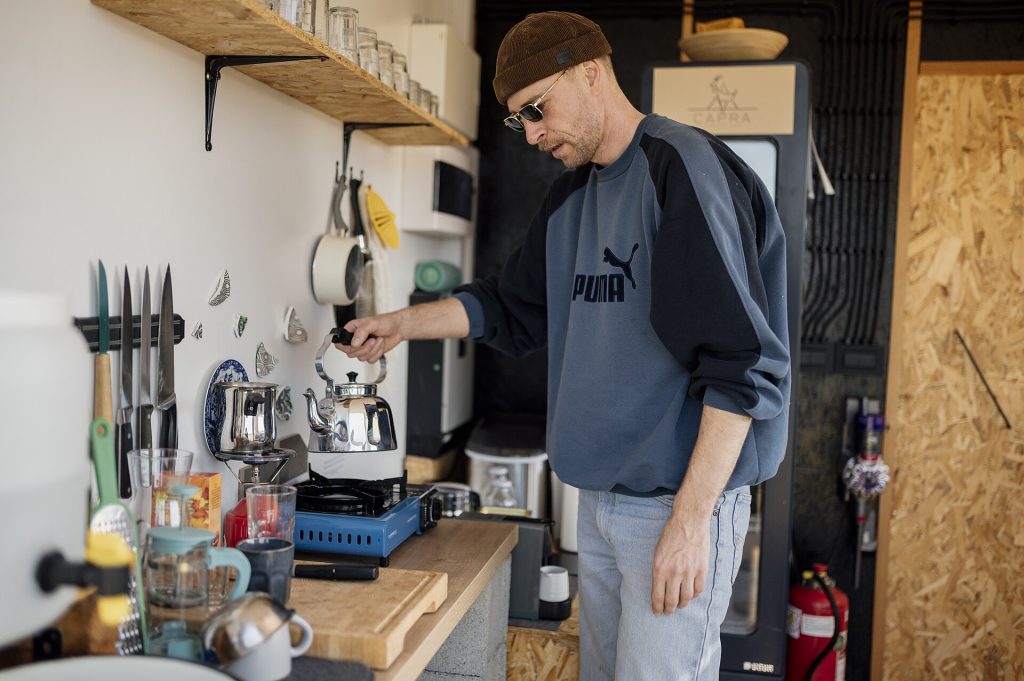
- Magnetic knife strips and rails free drawer and counter space; renters can look for freestanding or adhesive options.
- Door-mounted racks inside cabinet doors hold lids, spices or wraps.
Keep only the items you use often on the counter. A clear counter makes a small kitchen look larger and is easier to clean.
Living room
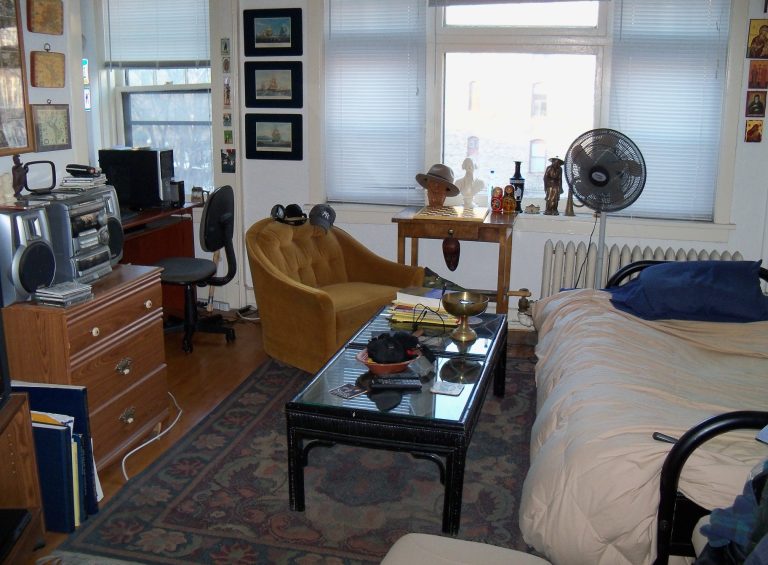
Living areas tend to collect books, electronics, remotes and blankets. Storage furniture helps a lot here. Consider a media console with closed doors to hide cables and devices, an ottoman or bench with a lift-up lid, baskets on open shelves, and a tall bookcase that uses vertical space. Cord organizers and a single power strip mounted behind furniture reduce visual clutter.
Bedroom
Under the bed is prime storage real estate. A platform bed with built-in drawers, or bed risers with low rolling bins, can hold off-season clothing, extra bedding or shoes. Other bedroom ideas:
- A narrow dresser that is taller rather than wider
- Floating nightstands or wall shelves instead of bulky bedside tables
- A headboard with shelves or cubbies
- Vacuum storage bags for bulky winter items
Closets
Many closets waste space with a single rod and shelf. A freestanding closet system or tension-mounted shelving can add a second hanging rod for shirts and folded storage for sweaters. Slim, uniform hangers save surprising space. Use the closet door for an over-the-door shoe or accessory organizer, and the top shelf for labeled bins of items you rarely need.
If you do not have a closet at all, an open clothing rack with a matching set of baskets can look tidy, especially if you limit it to your favorite pieces.
Bathroom
Small bathrooms benefit from storage that fits into otherwise unused space:
- An over-the-toilet shelving unit
- A tension-pole shower caddy
- Drawer organizers for toiletries and makeup
- Stackable bins under the sink
- Hooks on the back of the door for towels and robes
Decant products into a few matching containers if you like the look, and regularly toss expired items.
Home office corners
If you work from home, a wall-mounted fold-down desk or a narrow console table can serve as a workspace that does not dominate the room. Add a small file box for important papers, and a pegboard or rail above the desk for supplies. At the end of the day, putting the laptop away helps separate work and home.
Overlooked spaces
Look for unused areas that can hold something useful: the space above doorways for a shelf, the narrow gap beside the refrigerator for a slim rolling pantry, inside cabinet doors, the back of the bathroom door, or a corner that can take a tall, narrow shelf.
Renter-friendly installation tips
Read your lease rules on wall anchors and adhesives. Removable hooks and strips work for lightweight items when you follow the weight limits. Tension rods and freestanding units need no hardware at all. If you do make small holes with permission, keep a note of what you installed so you can patch and paint before moving out, which helps protect your security deposit.
Keep it working
A storage system only works if you maintain it. Label bins, put things back after use, and set a recurring time each season to edit and reorganize. When something new comes in, consider letting something old go. Small spaces reward these simple habits, and the result is a home that feels bigger than its square footage.
Frequently asked questions
What is the most effective storage upgrade for a small apartment?
For many people it is under-bed storage, because it uses space that is otherwise empty. A bed with drawers or a set of low rolling bins can hold a surprising amount of clothing and linens.
How can I add storage without drilling into the walls?
Use freestanding shelving, tension rods, over-the-door organizers and removable adhesive hooks that are rated for the weight you plan to hang. Always test adhesive products and follow their removal instructions to protect the walls.
How often should I declutter?
A quick daily reset keeps surfaces clear, while a deeper edit of one category every few months prevents clutter from building up. Many people find the change of seasons a natural reminder.
Photo: Northerner / Wikimedia Commons, CC BY-SA 4.0
Photo: Shixart1985 / Wikimedia Commons, CC BY 2.0
Photo: Crep171166 / Wikimedia Commons, CC BY-SA 4.0